
Why Security Installers Need Cabling Subs to Succeed
TL;DR:
- Cabling subcontractors are essential for providing compliant, documented, and long-lasting infrastructure for security systems. They coordinate with other trades, ensure standards compliance, and significantly reduce troubleshooting and maintenance costs. Early engagement of qualified cabling subs improves project speed, quality, and future upgradeability.
Security installers need cabling subs to deliver compliant, documented, and future-ready infrastructure that keeps integrated security systems running reliably for years. The industry term for this work is low voltage subcontracting, and it covers everything from structured CAT6 runs to access control cabling, firestopping, and as-built documentation. Without a dedicated cabling subcontractor, security integrators routinely face scope gaps, failed inspections, and callbacks that erode margins. This article explains why security installers need cabling subs, what standards govern the work, and how to select the right partner for commercial projects.
Why security installers need cabling subs on every commercial job
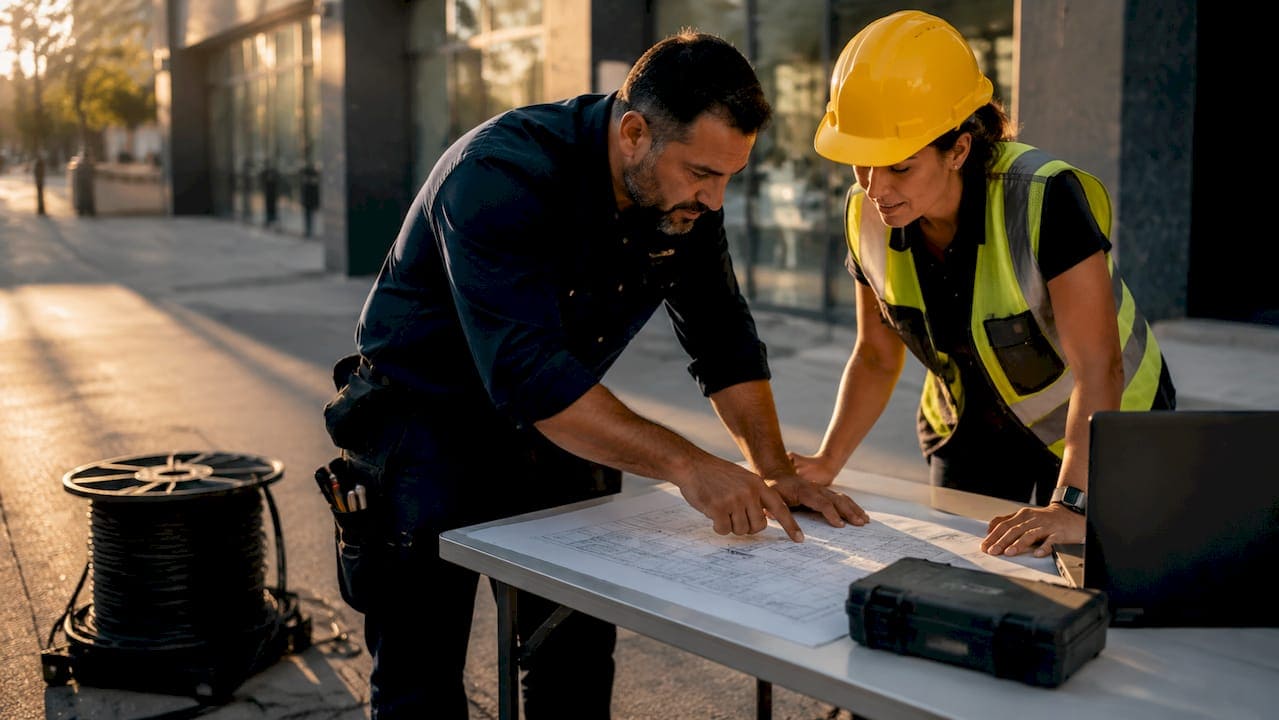
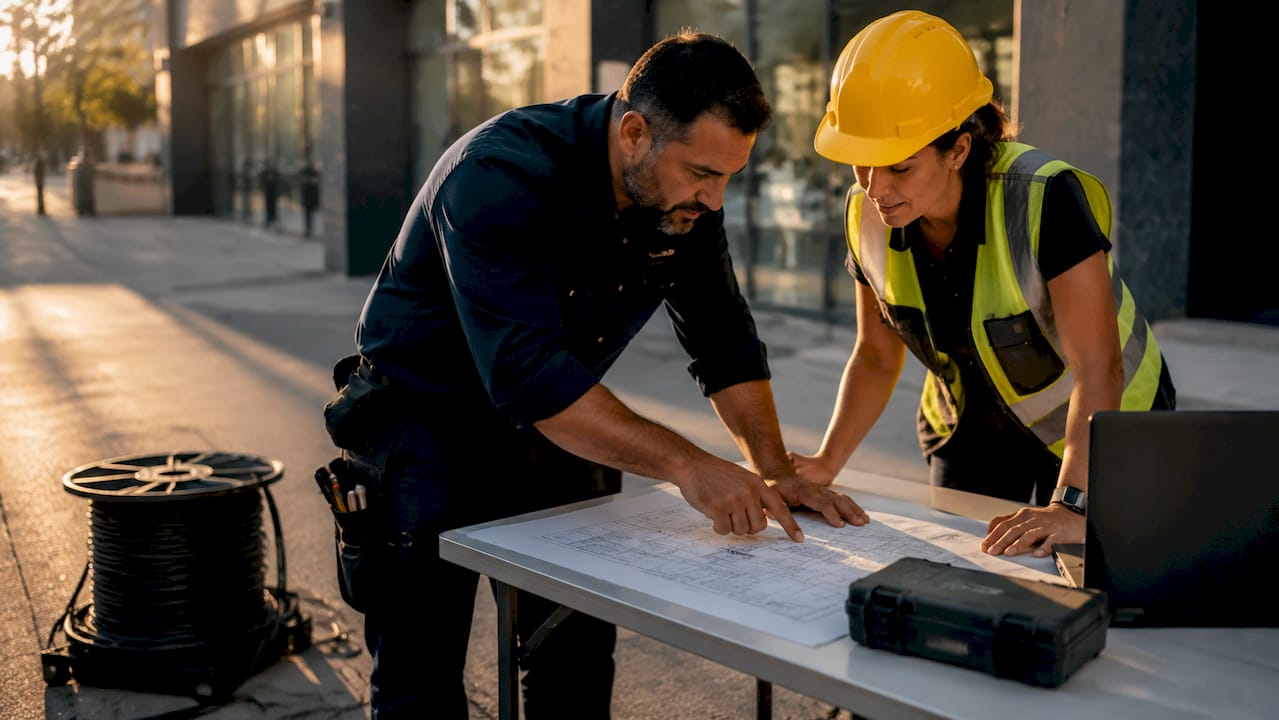
Cabling subcontractors, formally called low voltage subcontractors, are licensed specialists who handle the physical infrastructure that every security system depends on. Their value goes well beyond pulling wire. On commercial job sites, they coordinate with general contractors, electricians, and mechanical trades to protect pathway schedules and meet occupancy deadlines.
Fragmented vendor management in tenant improvements creates critical scope gaps. When cabling and security hardware are handled by separate vendors with no clear handoff, the result is missed conduit runs, unlabeled drops, and finger-pointing when systems fail. Consolidating low voltage work under a single specialized subcontract fixes that accountability gap directly.
The financial stakes are real. Network downtime costs businesses $5,600 per minute on average. That figure makes the cost of a qualified cabling sub look trivial compared to the cost of a single outage traced back to a bad termination or an unlabeled cable.
Professional cabling subs also bring commercial-grade knowledge that general installers often lack. They understand plenum ratings, firestopping requirements, and conduit fill rules that govern commercial construction. Skipping that expertise does not save money. It shifts risk onto the security installer when an inspector flags a violation or a client demands a warranty repair.
Operational benefits that show up on every project
Working with a qualified cabling subcontractor produces measurable improvements across the project lifecycle:
- Schedule protection. Cabling subs coordinate directly with the general contractor, reducing conflicts with other trades and keeping the project on timeline.
- Reduced callbacks. Properly terminated, tested, and labeled drops eliminate the most common source of post-installation service calls.
- Clear scope boundaries. A written subcontract defines exactly what the cabling sub delivers, removing ambiguity between the security installer and the end client.
- Compliance documentation. Licensed subs produce test reports, as-built drawings, and labeling that satisfy both the client and the authority having jurisdiction.
- Vendor accountability. One point of contact for all low voltage cabling means faster problem resolution and cleaner project closeout.
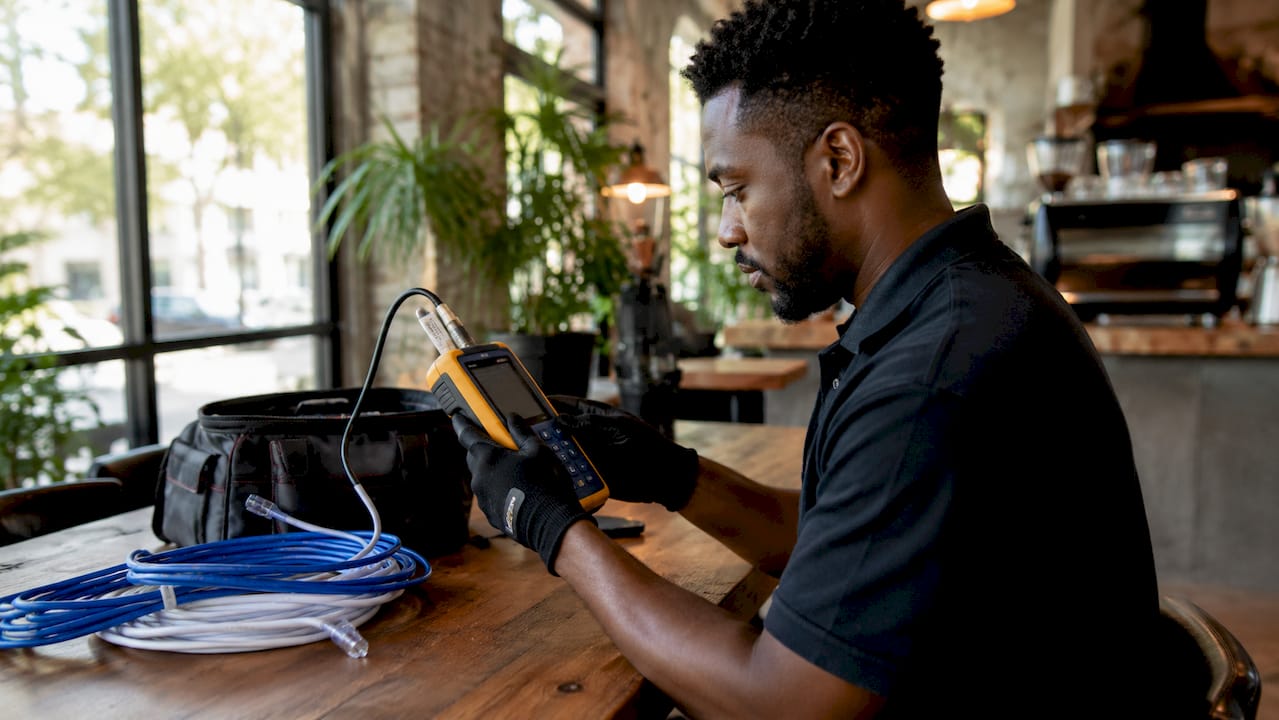
Pro Tip: Require your cabling sub to deliver a complete cable test report, using a Fluke DSX or equivalent certifier, before you schedule the final security system commissioning. Catching a bad run before the cameras go live is far cheaper than troubleshooting it after.
How do cabling subs ensure technical compliance and future-proof security systems?
Structured cabling is the standards-based approach that separates professional installations from ad hoc wiring jobs. The TIA-568 standard governs commercial cabling design, specifying cable categories, connector types, channel lengths, and testing requirements. A cabling sub who works to TIA-568 delivers an installation that any qualified technician can service, regardless of who installed the original security hardware.
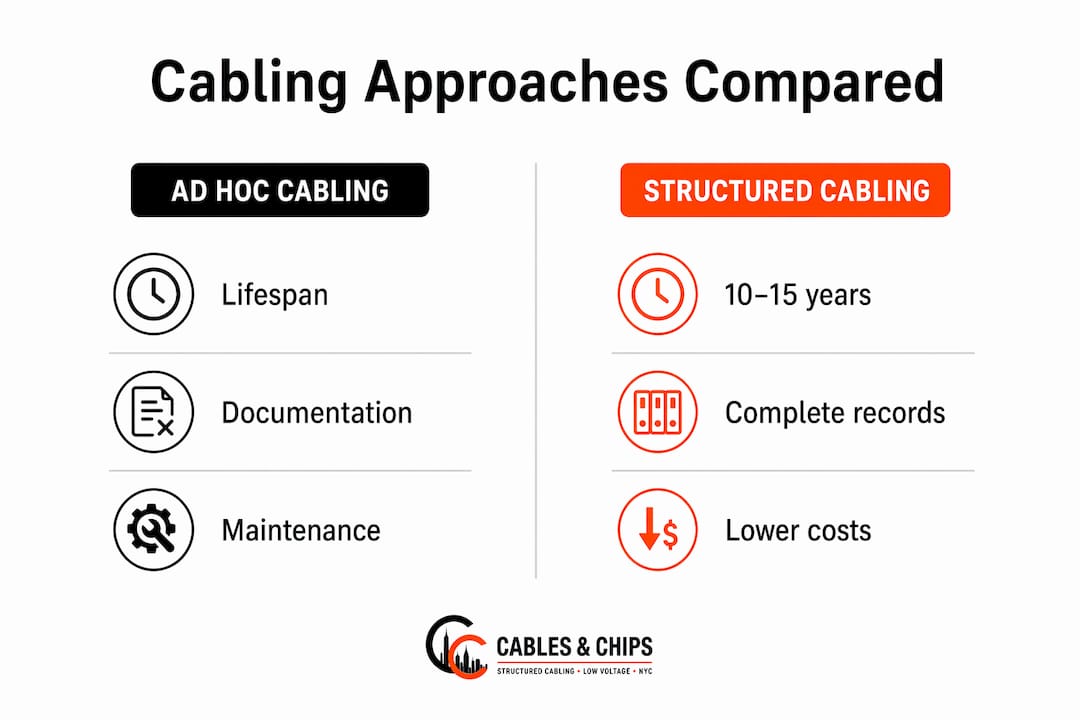
The lifecycle math alone justifies the investment. Structured cabling infrastructure has a projected lifespan of 10–15 years, while active security hardware typically cycles out every 3–5 years. That means the cabling plant will outlast two or three generations of cameras, access control panels, and NVRs. Building that plant to a documented standard protects the client’s investment across every hardware refresh.
Documentation is where many security installations fall short. Treating cabling as a short-term expense risks vendor lock-in and makes future troubleshooting far more difficult. A professional sub delivers labeled patch panels, color-coded runs, and as-built drawings that let any technician trace a fault in minutes rather than hours. That documentation is not optional on commercial projects. It is the difference between a system that ages gracefully and one that becomes a liability.
Pro Tip: Ask your cabling sub for a copy of the as-built documentation in both PDF and editable CAD format. Clients who receive both formats are far more likely to call you back for the next upgrade.
The table below summarizes the key differences between ad hoc cabling and structured cabling on security projects.
| Factor | Ad hoc cabling | Structured cabling |
|---|---|---|
| Lifespan | Unpredictable | 10–15 years |
| Documentation | Rarely provided | As-built drawings and test reports |
| Troubleshooting time | Hours to days | Minutes with labeled patch panels |
| Maintenance cost | High and unpredictable | Reduced by 50–75% |
| Compliance | Often fails inspection | Meets TIA-568 and local codes |
Professional structured cabling also prevents packet loss and network slowdowns caused by improper cable bends, poor separation from electrical interference, and substandard terminations. For IP cameras and access control systems that rely on PoE, those physical layer failures translate directly into dropped video feeds and door controller timeouts.
What are the risks of skipping specialized cabling subcontractors?
The most common mistake security installers make is assigning cabling work to whoever is available rather than whoever is qualified. Residential cabling contractors frequently fail on commercial projects because they lack the knowledge of pathway requirements, trade coordination, and code compliance that commercial work demands. The result is costly delays and rework that falls back on the security installer.
The risks compound quickly on larger projects:
- Failed inspections. Improper firestopping or missing plenum-rated cable in air-handling spaces triggers stop-work orders that delay the entire project.
- Physical safety hazards. Cables run without proper support, bend radius management, or separation from high-voltage conduit create both fire risk and signal degradation.
- Warranty callbacks. Substandard terminations cause intermittent failures that are nearly impossible to diagnose remotely, forcing repeated site visits.
- Increased troubleshooting costs. Unlabeled or undocumented cabling turns a 30-minute fault isolation into a full-day investigation.
- Client trust damage. A security system that drops offline because of a bad cable run reflects on the installer, not the cabling vendor.
The misconception that cabling is a disposable IT expense is the root cause of most of these failures. Cabling is a long-term architectural investment. The role of subcontractors in commercial projects is precisely to bring specialized expertise that the prime contractor does not carry in-house. Security installers who treat cabling that way protect their reputation and their margins.
How to select and integrate cabling subcontractors into your workflow
Choosing the right cabling sub requires more than checking a license number. The criteria below give security installers a practical framework for evaluating candidates before committing to a subcontract.
-
Verify licensing and certifications. In most states, low voltage cabling work requires a C-7 low voltage contractor license or equivalent. Look for technicians who hold RCDD (Registered Communications Distribution Designer) certification from BICSI, which signals formal training in structured cabling design and standards.
-
Review commercial project experience. Ask for references from commercial tenant improvement or new construction projects, not residential jobs. Commercial experience means the sub understands trade coordination, pathway scheduling, and code compliance in occupied buildings.
-
Require a clean, itemized bid. A professional cabling sub delivers a bid that specifies cable category, run counts, termination types, testing methodology, and documentation deliverables. Vague bids produce scope disputes at closeout.
-
Confirm testing and certification capability. The sub should own or have access to a cable certifier that produces TIA-568-compliant test reports. Verbal assurances about cable quality are not acceptable on commercial security projects.
-
Establish communication protocols upfront. Define how the cabling sub will report progress, flag conflicts with other trades, and communicate schedule changes. A sub who cannot produce weekly status updates is a liability on a multi-trade job site.
-
Integrate the sub into your project timeline early. Cabling rough-in must happen before walls close and after conduit is set. Bringing the sub in late forces rushed work and increases the chance of code violations.
Planning the cabling infrastructure before construction begins is the single most effective way to avoid schedule conflicts and rework. Security installers who treat cabling as a parallel workstream rather than an afterthought consistently deliver cleaner, faster projects.
Key Takeaways
Security installers who partner with licensed, certified cabling subcontractors deliver faster projects, fewer callbacks, and infrastructure that outlasts multiple hardware generations.
| Point | Details |
|---|---|
| Cabling subs prevent scope gaps | Consolidating low voltage work under one sub eliminates handoff failures between vendors. |
| Structured cabling lasts 10–15 years | Professional cabling outlasts active security hardware by two to three refresh cycles. |
| Documentation protects everyone | As-built drawings and test reports reduce troubleshooting time and support future upgrades. |
| Maintenance costs drop significantly | Professional structured cabling reduces ongoing maintenance costs by 50–75% versus disorganized wiring. |
| Commercial experience is non-negotiable | Residential cabling contractors lack the pathway, code, and trade coordination knowledge commercial projects require. |
What 40 years of cabling work taught me about security installations
Security installers often underestimate how much of their reputation rides on the cabling behind the cameras. I have seen integrators lose repeat clients not because the cameras failed, but because the cabling was a mess that nobody could service without a full day of detective work.
The short-term cost-cutting logic never holds up. A cabling sub who charges a fair rate and delivers labeled, tested, documented infrastructure saves the security installer three times that cost in avoided callbacks and troubleshooting hours. The math is not close.
What I have found actually works is treating the cabling sub as a co-equal partner on the project, not a vendor you call after the security hardware is already on order. Bring them in during the design phase. Let them flag pathway conflicts before conduit is set. Give them the access control cabling requirements early so they can spec the right cable category for each door controller and reader location.
The installers who do this consistently close projects faster, get cleaner sign-offs, and get called back for the next job. The ones who treat cabling as an afterthought spend their margins on rework. That pattern holds across every commercial market I have worked in, and it is not changing.
— Ken
Cables and Chips: cabling subcontractor services for security installers
Security installers in New York City trust Cables and Chips to handle the low voltage cabling infrastructure that their projects depend on. With more than 40 years of commercial experience, Cables and Chips delivers structured CAT6 installation, full as-built documentation, cable testing and certification, and CCTV and access control cabling for commercial offices, secure facilities, and enterprise environments throughout the city.
Every project includes labeled patch panels, TIA-568-compliant test reports, and clean network closet organization. Cables and Chips works directly with security integrators as a dedicated cabling subcontractor, handling coordination with other trades so you can focus on the security system itself. Contact Cables and Chips at 20 Vesey Street, Lower Manhattan, to schedule a consultation for your next project.
FAQ
Why do security installers need cabling subs specifically?
Security installers need cabling subs because low voltage cabling on commercial projects requires specialized licensing, trade coordination, and standards compliance that falls outside most security integrators’ core scope. A dedicated cabling sub handles structured cabling, firestopping, and documentation so the security installer can focus on system configuration and commissioning.
What certifications should a cabling subcontractor hold?
The most recognized credentials are the C-7 low voltage contractor license and the RCDD (Registered Communications Distribution Designer) certification from BICSI. These credentials confirm that the sub understands TIA-568 standards, commercial pathway requirements, and proper testing methodology.
How does structured cabling reduce maintenance costs?
Professional structured cabling reduces ongoing maintenance costs by 50–75% compared to disorganized cabling. Labeled runs, certified terminations, and clear patch panel documentation allow technicians to isolate and fix faults in minutes rather than hours.
What happens when cabling is not documented properly?
Undocumented cabling creates vendor lock-in and makes future troubleshooting far more difficult and expensive. Well-managed cabling documentation with clear labeling and patch panels enables instant fault isolation and minimal downtime during service calls.
How early should a cabling sub be brought into a security project?
A cabling sub should be engaged during the design phase, before conduit is set and walls are closed. Early involvement allows the sub to coordinate pathway requirements with other trades, flag conflicts before they become expensive rework, and spec the correct cable category for each security device location.