
Project Overview
Trace first, reorganize second, document everything.
The work was approached in controlled phases. Existing connections were reviewed, cable routes were traced, unused material was identified, and the rack layout was reorganized around serviceability. Patch cords were routed through appropriate managers, labels were standardized, and the completed arrangement was checked so the IT team could understand what remained in service.
The Challenge
Years of changes had made the rack difficult to service.
Active technology spaces often collect multiple generations of patch cords, abandoned cabling, undocumented moves, crowded pathways, and inconsistent labels. The immediate problem is visual clutter, but the larger risk is slower troubleshooting, accidental disconnections, blocked access, and uncertainty during maintenance. The retrofit required a careful plan that respected active equipment and existing dependencies.
Before & After
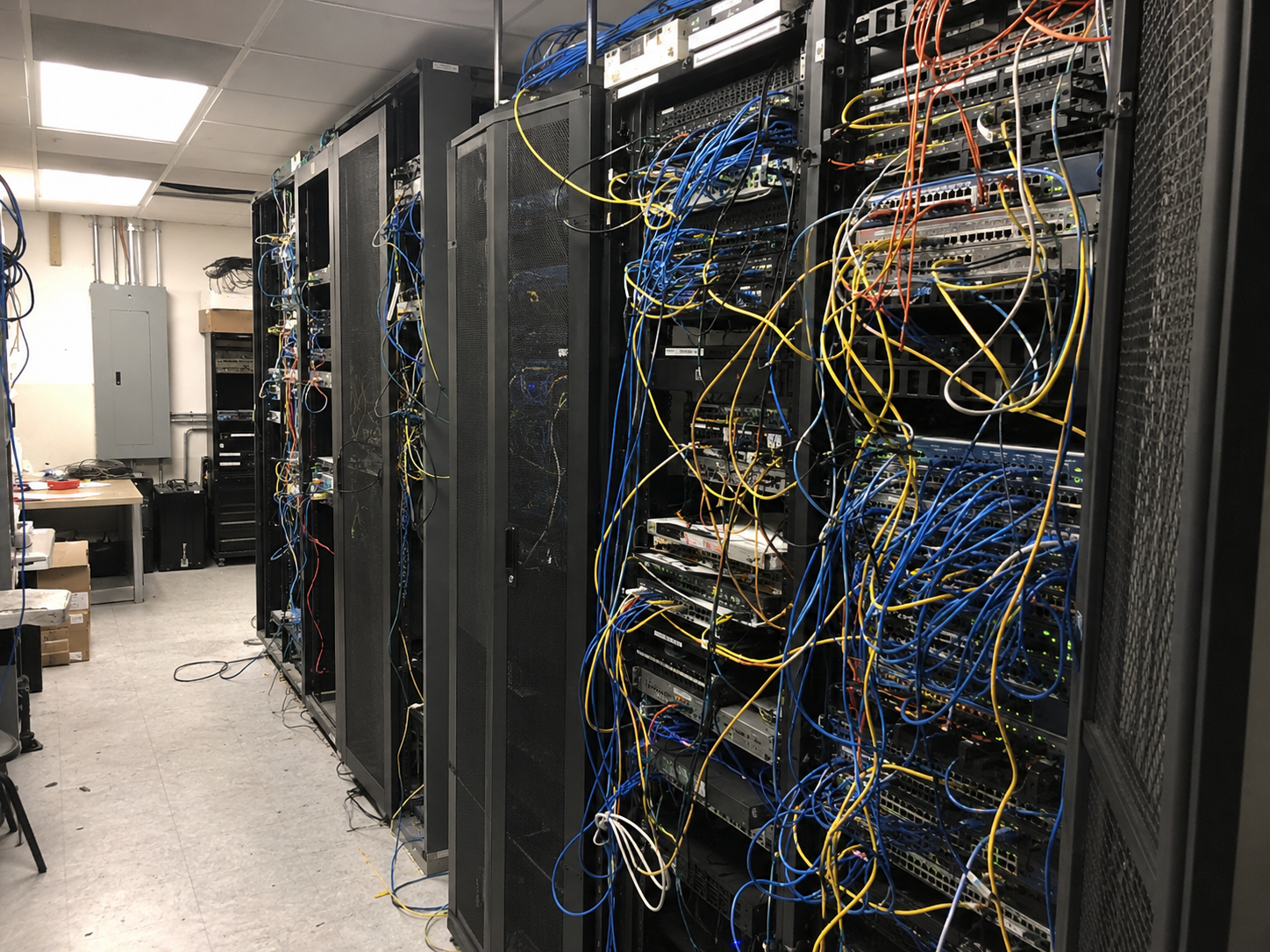 Before
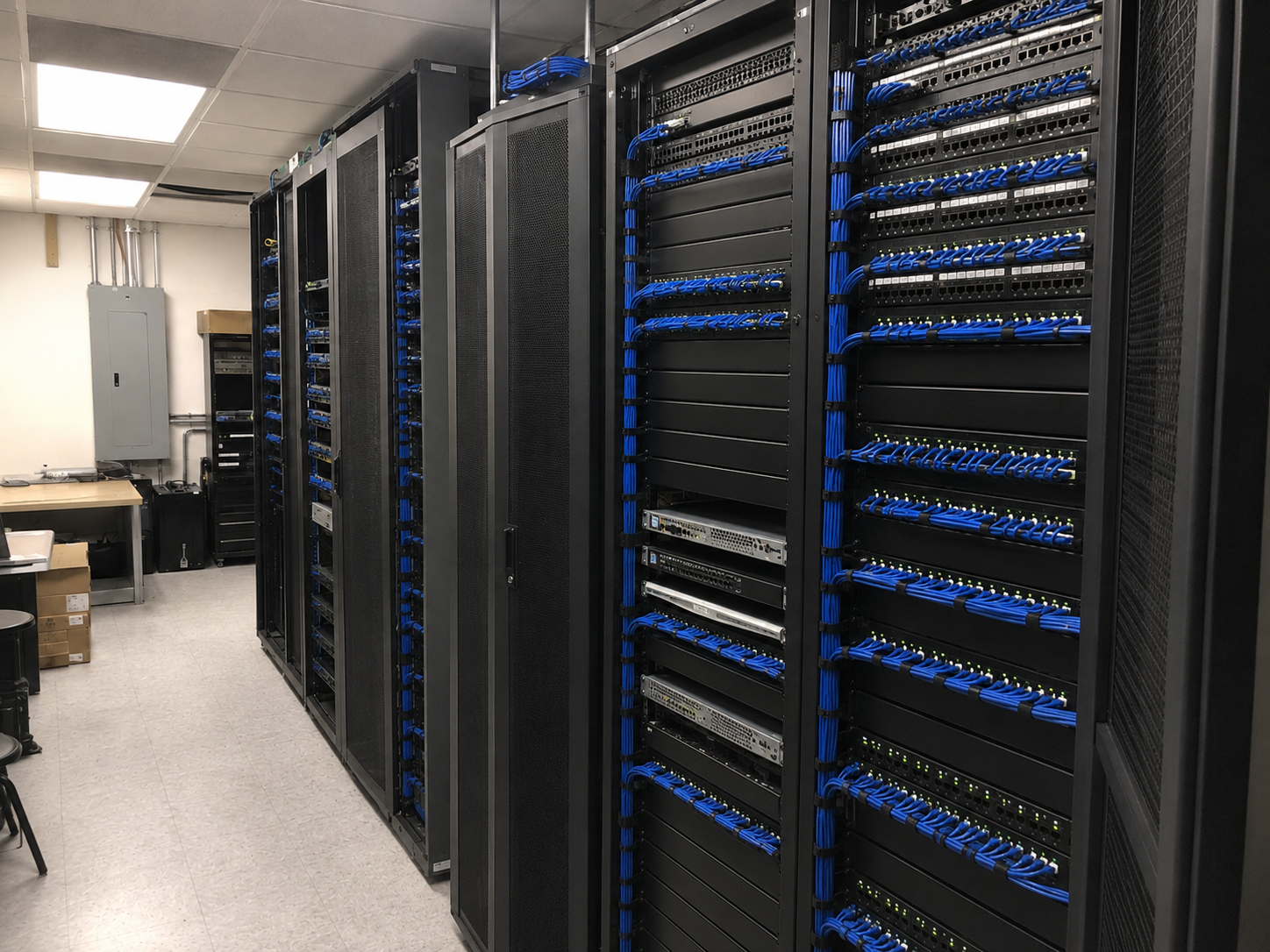 After
AfterRepresentative project imagery is shown until verified client photography is added.
Scope of Work
Existing rack and patch-panel assessment
Cable tracing and identification of abandoned or unused material
Patch-cord replacement, rerouting, and length correction where appropriate
Horizontal and vertical cable-management improvements
Rack dressing, port labeling, and equipment-access cleanup
Testing and documentation of active connections
Project Flow
Document the existing condition before moving active connections.
Trace and classify cabling so removals do not interrupt required services.
Rebuild cable paths in manageable phases around live equipment.
Label, test, photograph, and hand off the organized rack environment.
The Outcome
An organized rack that is easier to maintain.
The finished layout was designed to improve visibility, reduce unnecessary cable congestion, preserve access to equipment, and make future troubleshooting more deliberate. Clearer patching and labeling also give the client a better starting point for later upgrades and capacity planning.