
Low Voltage Power: When U.S. Codes Require Two Inches of Separation
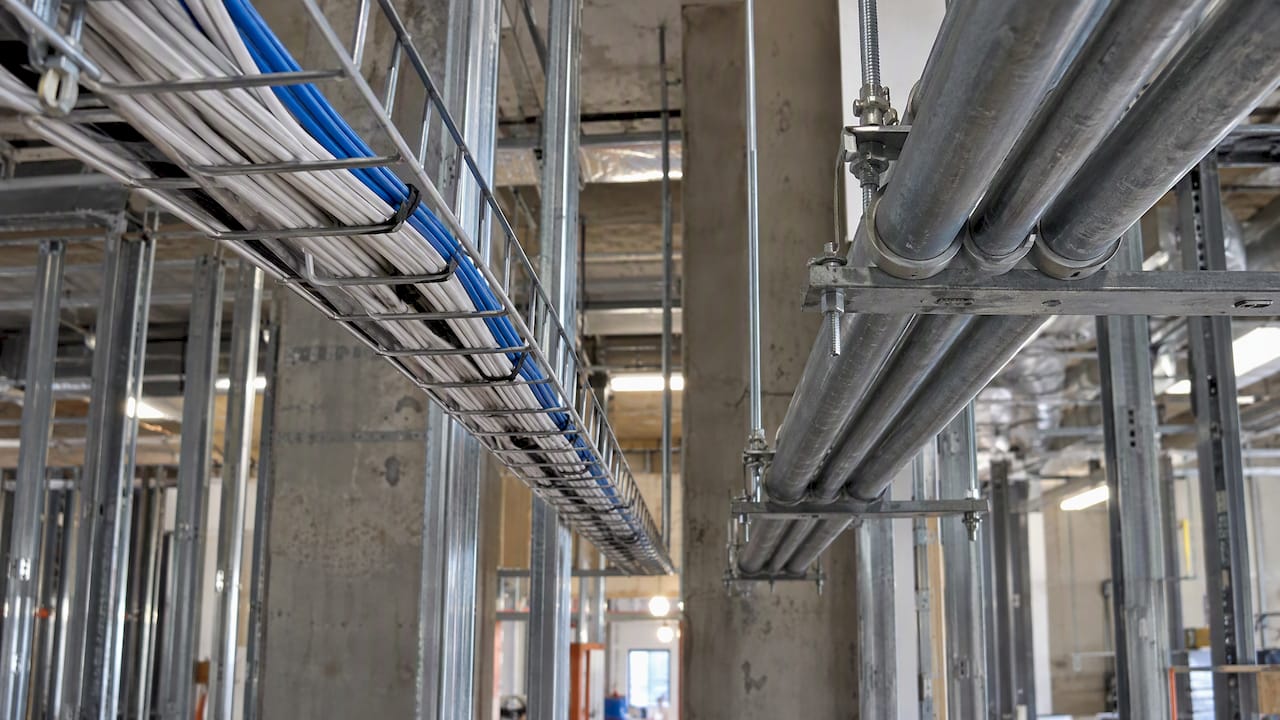
The common standard is two inches (50.8 mm) of separation between low voltage conductors and power circuits, a minimum carried in OSHA 1926.408 construction standards. The main exceptions apply when conductors sit inside a raceway, use metal-sheathed cable, or are divided by a continuous nonconductive barrier. The rule exists primarily to prevent accidental contact during a fault, with interference control a secondary benefit.
TL;DR:
- OSHA 1926.408 and the NEC generally require 2 inches of clearance; circuits above 300 volts need approved protectors or greater separation.
- You can replace the open gap with a qualifying raceway, continuous metal sheath terminated at both ends, or a permanent nonconductive barrier without gaps.
- Bond metal raceways, trays, and enclosures, then test continuity; ground each cable shield at one consistent point to avoid ground loops.
- Keep low voltage cables in separate pathways, avoid long parallel runs beside power, and cross unavoidable routes perpendicularly to reduce interference and installation problems.
- Before retrofit work, survey existing cable paths rather than trusting old drawings, and consult the authority having jurisdiction about ambiguous routes before walls close.
Codes and standards that govern power separation
Three bodies of regulation shape how we plan and inspect low voltage power separation on commercial jobs: OSHA, the NEC, and NFPA 731 for security systems. Knowing which one applies, and where they overlap, keeps a rough-in from turning into a rework order.
OSHA 1926.408 requires indoor communication conductors to sit at least 2 inches (50.8 mm) from electric light, power, or Class 1 circuit conductors unless an equally protective separation method replaces that clearance. Where conductors could contact power circuits above 300 volts, the standard calls for approved protectors or added separation, not just the baseline 2 inches.
OSHA 1910.305 addresses the wiring side of the equation: metal raceways, cable trays, and enclosures must be bonded for electrical continuity so fault current has a safe path, and isolated enclosures are sometimes used to cut grounding-circuit noise.
The NEC applies separation logic to Class 1, 2, and 3 circuits, communications cabling, and power-limited fire alarm wiring, generally landing on that same 50 mm (2 in) figure unless raceways, metal-sheathed cable, or permanent barriers are used instead.
NFPA 731 governs premises security system wiring and cross-references NEC and OSHA separation rules while adding its own requirements for power supplies and listed equipment on CCTV and access control jobs.
Key regulatory anchors for any separation decision:
- OSHA 1926.408 sets the construction-site 2 inch minimum for communication-to-power clearance.
- OSHA 1910.305 covers bonding and wiring methods for the raceways and enclosures carrying those circuits.
- NFPA 731 adds security-system-specific rules that still point back to NEC and OSHA baselines.
Exceptions that let you reduce clearance legally
A 2 inch gap is not always practical in a tight ceiling cavity or a crowded telecom closet, which is why the code recognizes several substitutes for open-air clearance.
- Raceway separation. Running power or low voltage conductors inside a qualifying raceway, rigid metal conduit, EMT, or another recognized enclosed pathway, satisfies the separation requirement without the 2 inch gap, since the raceway itself becomes the protective barrier.
- Metal-sheathed cable. Armored or metal-clad (MC) cable is accepted as an equivalent protection method in many mixed-voltage situations, provided the sheath is continuous and properly terminated at both ends.
- Continuous barriers and listed dividers. A fixed, permanent nonconductive barrier, including listed dividers inside cable trays, lets power and low voltage conductors share a tray when direct clearance is not achievable, a point OSHA’s cable tray guidance reinforces for mixed installations.
Each exception depends on installation quality. A raceway with a damaged fitting, an MC cable sheath with a poor termination, or a barrier with a gap all defeat the protection the code assumes is there. Treat the exception as a substitute for the clearance, not a shortcut around it.
Bonding, grounding, and shielding that keep separation effective
Separation only works as intended when the metal around it is properly bonded. OSHA 1910.305 requires effective bonding of metal raceways, trays, and enclosures so fault current has a safe, low-impedance path back to its source, and that same bonding reduces electromagnetic noise by giving stray currents somewhere predictable to go.
On a typical commercial job, that translates into a short list of habits:
- Bond every metal raceway section, tray run, and enclosure, then verify continuity with a meter before closing anything up.
- Choose shielded low voltage cable or a grounded metal raceway when a run must parallel power conductors for any real distance.
- Terminate shielding at one consistent point per run; grounding both ends of a shield can create a ground loop instead of solving one.
- Scrape paint or coating off threads and contact points before bonding connections, since a coated surface looks connected but is not.
Pro Tip: Add an insulated equipment grounding conductor inside a raceway run whenever a job mixes power and sensitive low voltage cabling, even if the raceway itself technically satisfies separation.
Routing, labeling, and support practices that avoid rework
Code compliance is the floor. The habits below are what keep a job clean, inspectable, and free of EMI complaints six months after the general contractor signs off.
- Route low voltage cabling in its own pathway and avoid long parallel runs beside power conductors; where a crossing is unavoidable, make it perpendicular rather than parallel.
- Support and fasten low voltage cable separately from power conduit. Strapping both to the same hanger with the same ties saves a few minutes and creates a code and maintenance problem later.
- Use separate cable ties and labeling for low voltage versus power runs so the next electrician or technician on site can identify each pathway without guessing.
- Document separation distances and barrier locations on as-built drawings, and loop in the general contractor and the authority having jurisdiction (AHJ) early rather than after the walls close.
Serviceability matters as much as the initial install. A rack or ceiling that reads clearly years later saves far more labor than the shortcut that created it ever did.
How to plan separation during rough-in and retrofit
A short, ordered process during design and rough-in prevents most separation violations before they happen.
- Pre-job review. Check plans against OSHA, NEC, and NFPA 731 requirements where security wiring is involved, confirm cable listings, and mark where raceways or barriers will be needed before pulling a single cable.
- Rough-in execution. Lay out routes on site, install raceways or nonconductive barriers at the marked points, and hold the 2 inch minimum everywhere an exception is not in use.
- Verification and sign-off. Run bonding and continuity tests, inspect barrier and raceway integrity, record actual separation on updated drawings, and get AHJ sign-off before the ceiling or wall closes.
Retrofit work adds one wrinkle: existing cable paths rarely match the original drawings, so a quick as-found survey before rough-in starts saves the rework that comes from assuming the old plan was accurate.
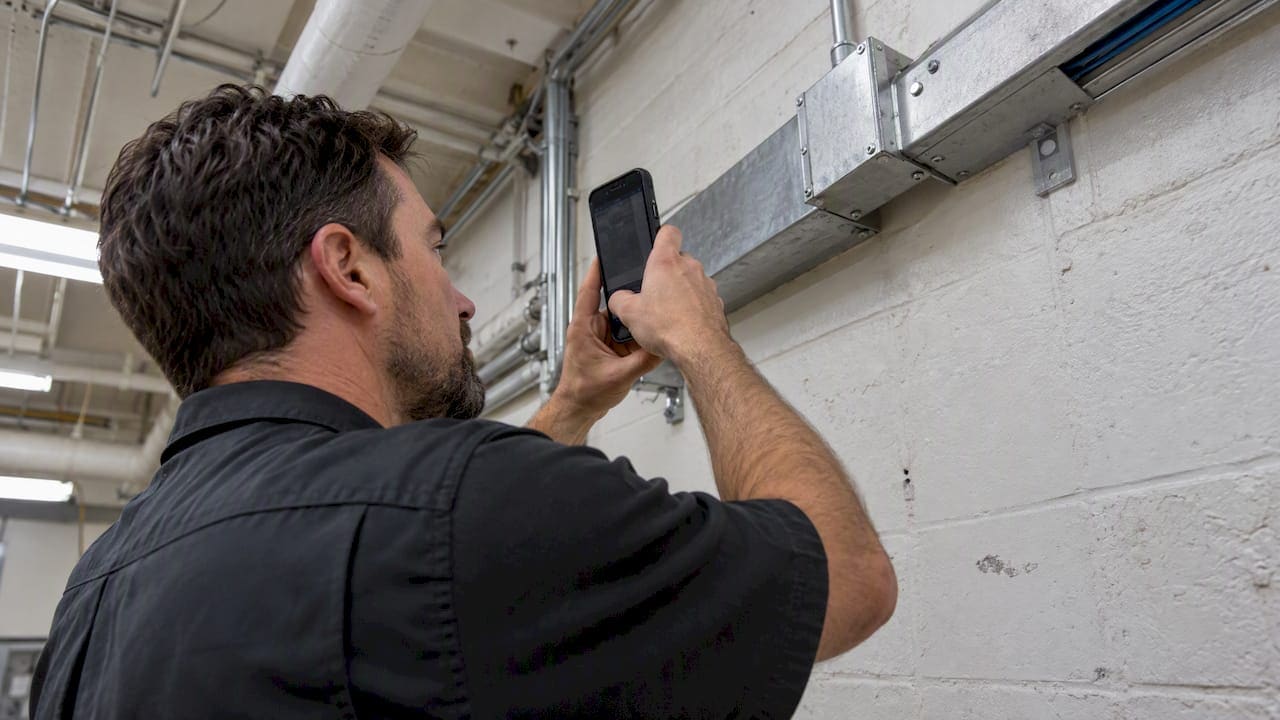
Pro Tip: On retrofit jobs, photograph existing raceway and barrier conditions before touching anything. It settles disputes about what was or wasn’t compliant before you arrived.
A practitioner’s view on compliance-first installation
Our team has spent years pulling cable through ceilings where someone had strapped a CAT6 run straight to a 277-volt conduit to save ten minutes. The fix always costs more than the shortcut saved, in callback labor if nothing else. Treating separation as a safety requirement first, not an afterthought squeezed in before inspection, tends to produce installations that also perform better and generate fewer interference complaints down the line, according to best conduit trenching practices. When a job presents a genuinely ambiguous situation, a tight mechanical room or an unusual tray layout, the right move is a direct conversation with the AHJ before the rough-in is buried behind drywall.
— Ken
Compliant low voltage installation from Cables & Chips
Getting separation right on paper is one thing. Getting it right across a full floor of structured cabling, CCTV runs, and a server rack closet is another, and it is the work we do every day. Our structured cabling, testing, and MDF/IDF cleanup services are built around documented, bonded, inspection-ready installations, including the CCTV and access control cabling where NFPA 731 compliance matters most.

If you have a commercial space that needs a compliant low voltage buildout or a second opinion on existing cable routing, we offer a no-obligation site survey to walk through your specific layout.
FAQ
Why does the US have such low voltage?
This article’s separation rules apply regardless of the voltage levels in a facility with low voltage cabling.
What is the 3% voltage drop rule?
The 3% voltage drop guideline is a design recommendation for branch circuits, intended to keep power delivery efficient over longer conductor runs, and it is separate from the physical clearance rules covered in this article. It addresses circuit sizing, not the distance between power and low voltage conductors.
Can you splice low voltage wires together?
Low voltage conductors can generally be spliced using listed connectors or termination methods appropriate to the cable type, but splices should still respect the same separation and barrier requirements as continuous runs. A splice point inside a raceway or behind a proper barrier keeps the installation consistent with OSHA 1926.408.
Is the voltage in the USA 220v or 240V?
Residential services deliver standard voltage levels for outlets and appliances, and commercial buildings add higher voltage circuits, all of which fall under the same separation requirements relative to low voltage cabling.